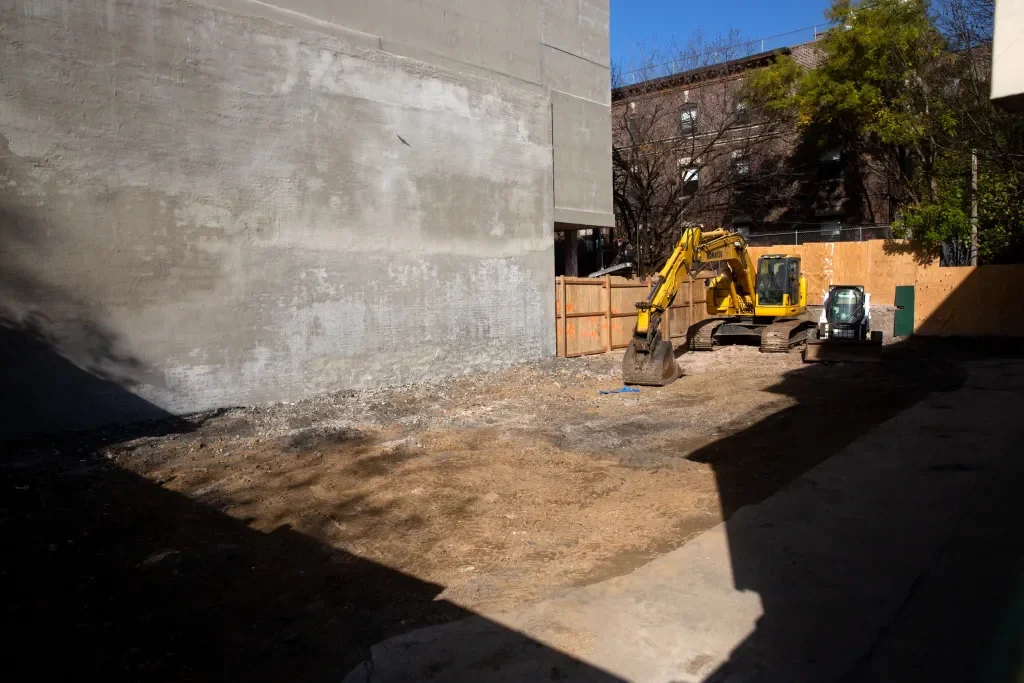
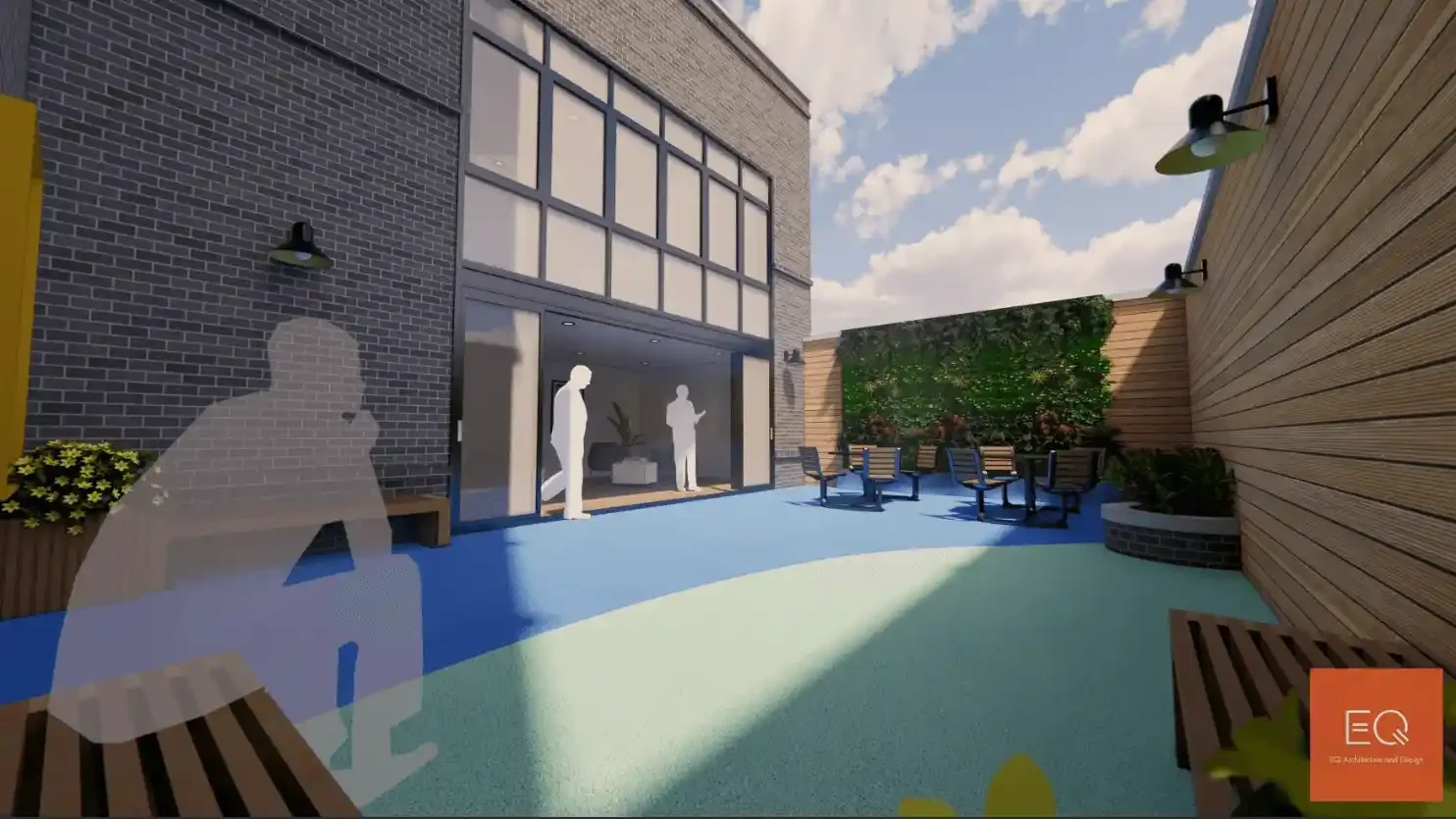
Hope House on Crotona Park (HHCP or Hope House), anticipated to open in April of 2026, is an Alternative to Incarceration (ATI) for people living with Serious Mental Illness (SMI), including those with co-occurring Substance Use Disorders (SUD), accused of felony level crimes. Hope House will offer a longer-term (one-to-two year expected length of stay) residential program for 8 men and 8 women operated by the Greenburger Center for Social and Criminal Justice, Inc., (GCSCJ), with 24/7 residential and security staff and an on-site treatment program provided by an outside provider Monday – Friday.
Hope House is a first-of-its-kind model in the nation because of its use of bond agency authority to provide security in a voluntary ATI program and its co-located integrated residential and therapeutic treatment services.
Hope House will serve anyone ages 18 and older, residing in New York City’s five boroughs at the time of their arrest, though at the request of the local Community Board, Hope House will not accept people accused of crimes of a sexual nature. Preference for up to 4 beds will be given to people living in the Bronx at the time of their arrest as per a request of local Community Board.
A Voluntary Program for those Determined Mentally Competent to Participate
Admission to Hope House is on a voluntary basis with advice of counsel and consent of the Court. In cases where sentencing law mandates incarceration, Hope House will require district attorney (DA) consent before enrollment including acknowledgment and agreement by the DA that such charge will be dropped and replaced with a lower charge including agreement that a non-in carceral sentence should be imposed, where the terms of the Plea Agreement are met.
A client’s competency to make this voluntary decision will be carefully considered. A client not able to demonstrate a rational and factual understanding of the elements and consequences of the decision and the services offered at Hope House will not be enrolled in the program. Clients actively violent or threatening violence are also not eligible.
The Diversion Process
Once determined competent, a client’s enrollment occurs at the point of a Court ordered Plea agreement, including the following five components:
A plea of guilty to the agreed upon charge(s), with sentencing adjourned until either: completion of the mandated ATI residential treatment phase or early discharge from the ATI;
Imposition by the Judge of “nominal bail” pursuant to CPL 510.10(5), as a condition of the Plea and release to the ATI, to be enforced by an outside bond agent or other authorized person specifically trained by Hope House;
A commitment by the Court to a sentence requiring no further incarceration upon successful completion of the ATI program (a sentence could include a period of post release supervision, including, where appropriate, a term of probation);
A stated sentence of incarceration that will be imposed if the client does not successfully complete the program, which sentence will be no greater than that which would have been imposed in the absence of program participation; and a commitment that, should the client be unable to successfully complete the ATI program, the sentence that the client receives will be reduced by one day for each day that the client spent in treatment.
Treatment Philosophy & Licensure
Program and residential staff will provide evidenced based work-ordered-day programming, mindfulness and meditation, violence reduction, restorative justice programs, and life skills training, including job/education services. Mental health and substance use disorder clinic services will be provided on site in a designated treatment space. Physical health care services and some additional mental health care will be available via a mobile unit.
Re-Entry into the Community
Re-entry planning will comply with NYS Office of Mental Health licensure requirements and will begin at the time of enrollment. The goal of Hope House residential and therapeutic programming will be stabilization of any substance use disorders, management of psychiatric symptoms, and the treatment of underlying mental and physical disease. Upon stabilization, residential program staff will work to instill life and where possible, job skills which are essential to successful re-entry into the community.
Beginning in the second year of a client’s stay, or as soon as possible, residential staff and a re-entry coordinator will work with clients and nonprofit organizations with extensive community experience with Hope House’s target population to provide support in three major areas: 1) evaluation, motivational counseling, referral to residential programs; 2) family education, support, and reconciliation services; and 3) re-entry/recovery support and case management service.